Thoughtwax
The Lossy Signal
Hiring in the tech industry is chronically hard on both sides. So even the most well-crafted interview process is by definition a lossy signal at best.
A candidate might get “strong hire” from the entire loop; conversely, a company may seem like the greatest place to work. And they often are! But you won’t actually know for sure until you’ve worked together. Being Interviewed and Actually Doing The Job are two very different skillsets (as are interviewing someone and managing them), so one is a rough proxy for the other at best. This room for error is why safeguards like “statutory probationary period” or “fuck this place I’m outta here” exist.
The modern Irish political system has a similar problem, but lacks any of the built-in escape hatches.
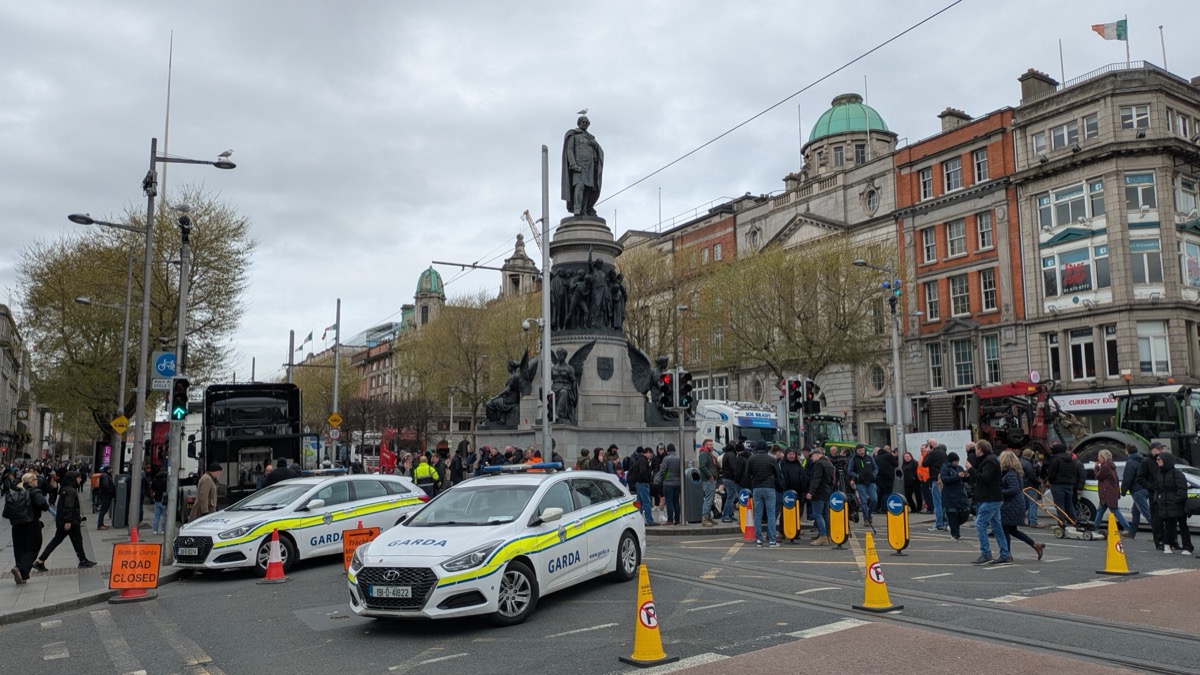
Irish fuel protests in Dublin, April 2026 (Wikimedia)

The recurring electoral cycle sees us re-interviewing the same candidate pool for the same jobs every few years, and apparently selecting for some inchoate combination of soundness, cuteness, parish pump potholery, and above all else, an unholy ability to stick to the script. Irish politicians (famously over-represented by ex-teachers and landlords) and especially Ministers are not selected for their role specialisation, prior knowledge, or ability to do the actual job.
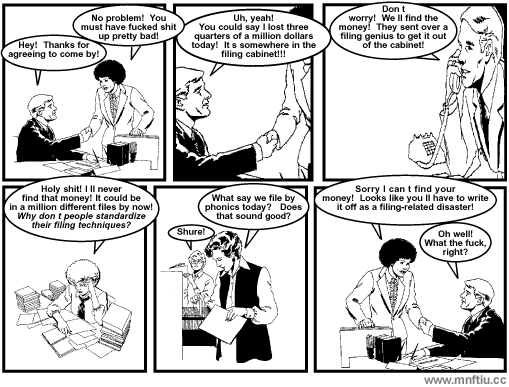
My New Filing Technique is Unstoppable, #3
Another concept from the tech world is that of “fat kings,” often referred to in more polite circles as “incumbents.” These are big companies that are coasting out in front, absolutely printing money. Hiring inevitably gets a little sloppy, teams get a bit dysfunctional, but nobody asks too many questions—the sweet, sweet liquor of growing Annual Recurring Revenue takes care of that. These guys become soporific, comfortable, and thus easy marks for startups to disrupt; over time the forest renews itself.
The Irish State’s version of this dynamic is Foreign Direct Investment, a seemingly undisruptable annual dividend that stubbornly insists on throwing more of itself at the government each year regardless of how pitifully they actually manage things.
Thus both ARR and FDI can paper over a lot of systemic cracks. But in both companies and electorates that are subject to this dynamic, you inevitably end up getting sloppy, and hiring people for how well they interview rather than finding out how well they can do the job.
Irish politicians are professional at getting elected, not at governing. We can blame them for this, but to be fair we as an electorate don’t exactly provide a crisp job spec: we vote back in the same two centrist parties, elect a leftist president, and show up at right-inflected protests. It is unsurprising that in response we get milquetoast politicians. This is why we end up with completely unqualified people running complex departments, and may be why we don’t seem to have a strategy as a country.
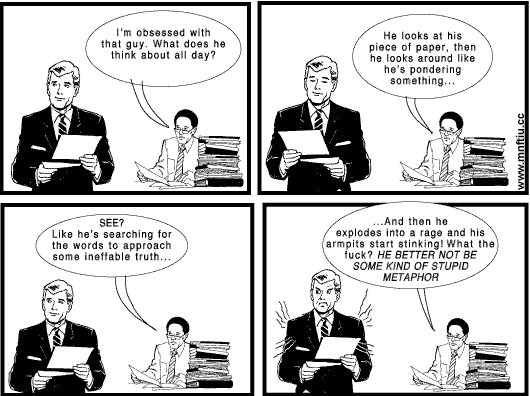
My New Filing Technique is Unstoppable, #166
AI has hit the tech industry like a shockwave. Many people are scrambling to retool themselves. The tide is currently going out on the SaaS business model, and we’ll find out which companies were riding waves and which had a strategy all along.
Analogous geopolitical shockwaves seem likely to be coming for Ireland. Our body politic is not yet scrambling, and is starting to look like a category error: not the wrong people, but the wrong type of people for the job. Ireland has enjoyed the benefits of its economic proximity to the US and EU without ever building the institutional resilience that any wealthy but dependent nation should: no real energy security strategy, no defence capability, no industrial diversification.
One final tech aphorism for Ireland to consider: “a clown car that fell into a goldmine.” Meant to refer to a company that had incredible core potential, but was mismanaged to ruin. The canonical example is Twitter. Look how that turned out.
Previously on thoughtwax: March 2006 Dublin riots, SF protests, changing Ireland, 2019 Dublin farmers’ protests. See also: Mind the Gap, Is Ireland the worst run country in Europe?